PTFE vs. Ceramic Coating: What You Need to Know About Air Fryer Safety
Understanding PTFE: The Science Behind the Concern
PTFE, or polytetrafluoroethylene, has been the dominant non-stick coating in cookware since the 1960s. Marketed under brand names like Teflon, PTFE provides excellent non-stick properties at a low manufacturing cost. However, the safety profile of PTFE has come under increasing scrutiny.
At normal cooking temperatures (below 260 degrees Celsius), PTFE is chemically stable and considered safe by regulatory agencies including the FDA and EFSA. The concern arises when PTFE is heated beyond its thermal stability threshold. Above 300 degrees Celsius, PTFE begins to decompose, releasing ultrafine particles and toxic gases including perfluorooctanoic acid (PFOA) derivatives.
While modern PTFE coatings are manufactured without PFOA (following a voluntary industry phase-out completed in 2015), the thermal decomposition products of PTFE itself remain a concern. In air fryers, which can reach temperatures of 200-230 degrees Celsius during normal operation, the safety margin is narrower than many consumers realize.
Ceramic Coatings: A Safer Alternative
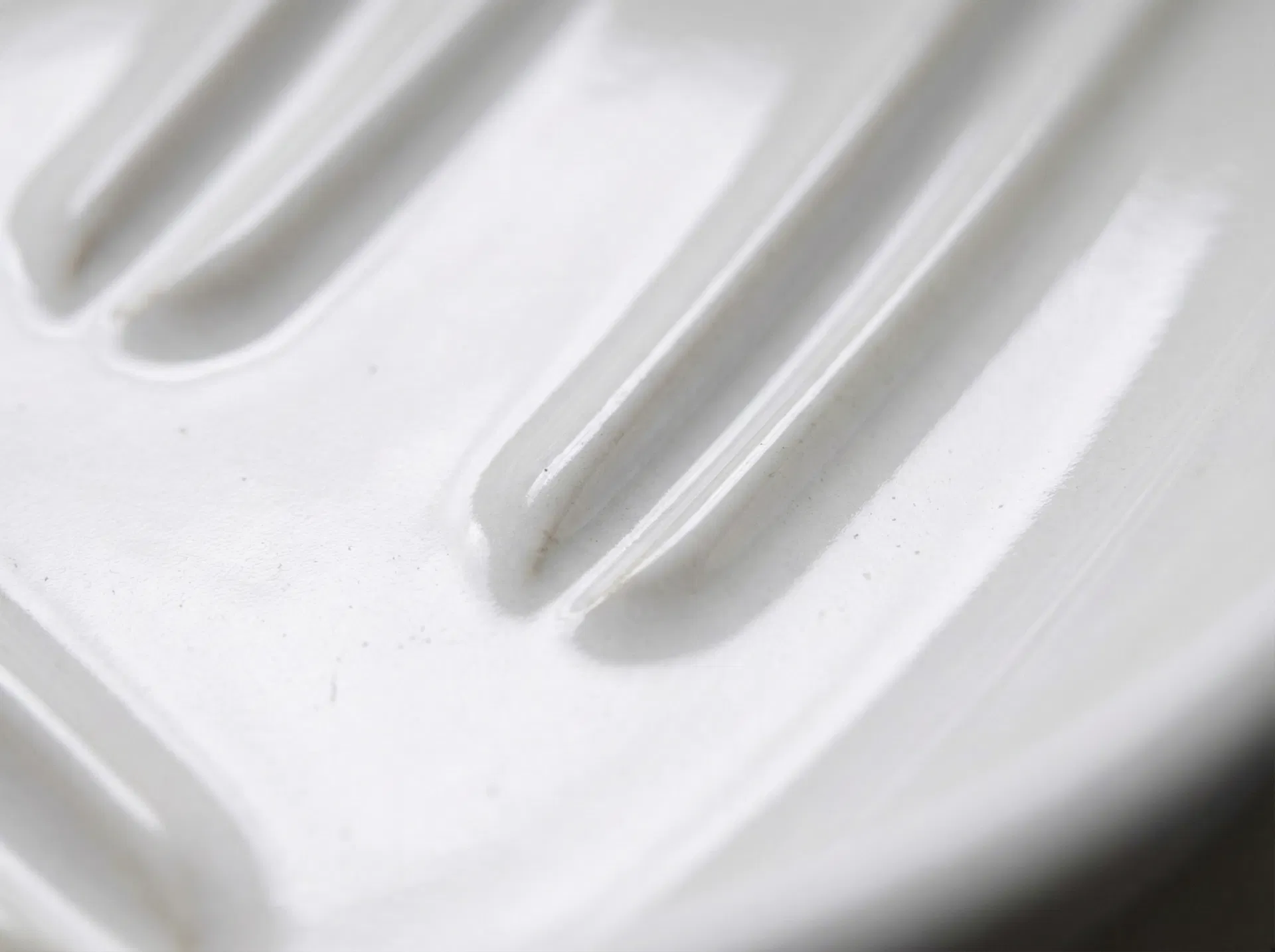
Ceramic coatings are made from inorganic materials, primarily silicon dioxide (silica) and aluminum oxide (alumina). Unlike PTFE, ceramic coatings contain no fluoropolymers, no PFOA, and no PFAS (per- and polyfluoroalkyl substances).
The thermal stability of ceramic coatings far exceeds that of PTFE. Medical-grade ceramic glaze, such as that used in ZESTCO products, remains chemically stable at temperatures up to 800 degrees Celsius, providing a safety margin of over 500 degrees above typical air fryer operating temperatures.
The trade-off historically has been durability. Early ceramic coatings wore out faster than PTFE, losing their non-stick properties after 6-12 months of regular use. However, advances in ceramic coating technology, particularly multi-layer application processes and improved bonding agents, have significantly extended the lifespan of modern ceramic coatings to 2-3 years of regular use.
What to Look for When Choosing
When evaluating air fryer coatings, look beyond marketing claims. Specific certifications provide objective safety assurance. FDA 21 CFR 175.300 compliance confirms the coating is safe for food contact. California Proposition 65 compliance means the product does not contain chemicals known to cause cancer or reproductive harm. LFGB certification (German Federal Institute for Risk Assessment) applies some of the world's strictest food-contact material standards.
Ask manufacturers directly: Is the coating PTFE-free? Is it PFOA-free and PFAS-free? What is the maximum safe operating temperature? Reputable manufacturers will provide clear, specific answers to these questions.
The ZESTCO Approach
At ZESTCO, every product in both the EasyCook and ProSense AI series uses medical-grade ceramic glaze coating. This is not a cost-driven decision. Ceramic coatings cost approximately 3-4 times more than PTFE coatings to manufacture. It is a safety-first design philosophy that prioritizes long-term health over short-term cost savings.
Our ceramic coating undergoes independent third-party testing for FDA, Proposition 65, and LFGB compliance. Each production batch is tested for heavy metal migration, ensuring that no harmful substances transfer to food during cooking.